Single-stage pumps (screw pumps) are indispensable in industries such as oil and gas, food processing, pharmaceuticals, and wastewater treatment. Cavitation is one of the most damaging phenomena, as it can severely damage the main components of these pumps – the rotor and stator. In this article, we examine in detail the effects of cavitation on these components and propose effective solutions for preventing and eliminating this problem.
Introduction: Functioning of a single pump and the importance of the rotor and stator.
Single-stage pumps consist of two main components:
-
Rotor : The rotating part is usually made of stainless steel.
-
Stator : stationary part made of elastomer.
These two components work together to create gradually expanding cavities that transport the fluid from the inlet to the outlet. Cavitation occurs when the pressure at certain points drops below the saturation vapor pressure of the fluid, causing vapor bubbles to form. These bubbles implode upon encountering areas of high pressure, generating powerful shock waves.
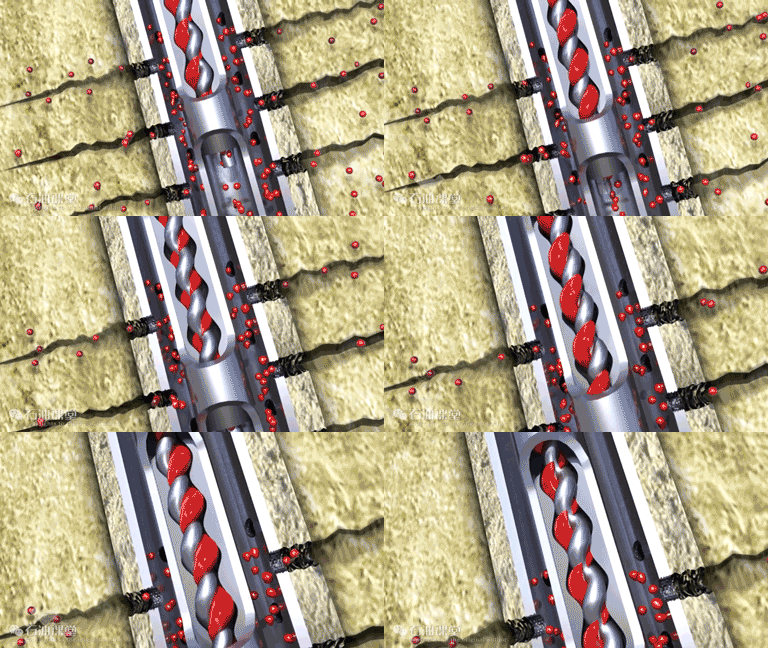 Mechanism of cavity damage in rotor and stator
1. Direct physical injuries
-
Create microscopically small holes on the rotor surface.
-
Local wear and unevenness on the stator surface
-
Destruction of the flexible stator structure
2. Thermal effects
-
Local temperature increase at the points where bubbles burst.
-
Change in the properties of the stator elastomer
-
Reduction of the service life of materials
3. Chemical effects
-
Accelerated corrosion of the metal rotor
-
Chemical decomposition of the stator elastomer
-
Increased aging rate of the materials
4. Dynamic Effects
-
generate unwanted vibrations
-
Low geometric accuracy of the parts
-
Changes in the physical modification of the rotor and stator.
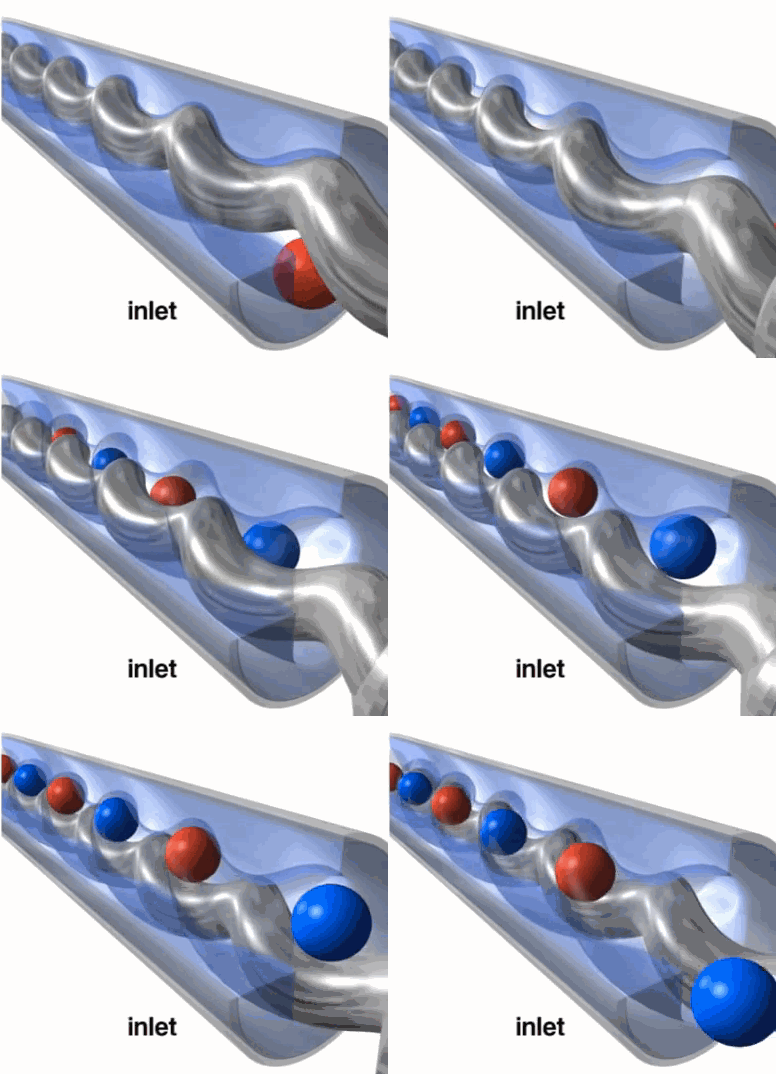 Signs of cavitation in a pump
Sound signals:
-
Irregular noises, as if stones were colliding.
-
Increased overall noise level of the pump
-
irregular drum sounds
Functional symptoms:
-
Low flow rate
-
Pressure fluctuations
-
Low efficiency
-
Increased energy consumption
Symptoms:
-
small holes in the rotor
-
Rough stator surface
-
The presence of local cavities in the elastomer
Factors that cause cavitation in single-stage pumps
1. Factors related to the extraction system:
-
excessive absorption
-
The diameter of the suction hose is insufficient.
-
Blocked suction line (blocked filter, closed valve)
2. Fluid-related factors:
-
high viscosity
-
Temperature near boiling point
-
Presence of dissolved gases
-
high vapor pressure
3. Factors that affect pump performance:
-
very long workday
-
The outlet pressure is too high
-
Operation in a suboptimal area of the pump characteristic curve
4. Environmental factors:
-
Low air pressure (at high altitudes)
-
Changes in ambient temperature
Solutions for caries prevention
1. Improve the extraction system:
-
Reduce suction power
-
Increase the diameter of the intake pipe.
-
Installation of a pressure vessel at the inlet
-
Use a pressure booster pump if necessary.
2. Control of the liquid properties:
-
Adjust the temperature of the liquid (lower the temperature if it is close to the boiling point).
-
Remove the air from the liquid before it enters the pump.
-
Reduce viscosity if possible.
3. Correct selection and operation of the pump:
-
How to choose a pump with the correct NPSH value
-
Operation within the optimal yield curve range
-
Use an inverter for remote control
-
Avoid closing the valve on the drain pipe.
4. Protective solutions:
-
Installation of cavity detection sensors
-
Use stronger materials for the rotor and stator.
-
Installation of security alarm systems
The influence of cavitation on the service life of components.
Effect on dizziness:
-
In severe cases, life expectancy is reduced by 60%.
-
Need for early replacement or upgrade
-
Increased maintenance costs
Effects on the stator:
-
Under strong cavitation conditions, the service life can be reduced by up to 75% .
-
Frequent replacement required
-
gradual decrease in pump performance
Methods for caries detection
1. Phonetic methods:
-
Sound analysis with special microphones
-
Use of an ultrasound device
2. Vibration method:
-
Vibration analysis using an accelerometer
-
Monitoring of changes in the vibration spectrum
3. Functional methods:
-
Monitoring of changes in flow rate and pressure
-
Measurement of energy consumption
4. Visual methods:
-
Regular checkups for dizziness and static tension
-
Use of endoscope cameras
Preventive maintenance program to reduce the effects of cavitation
a) Daily inspection:
-
Monitor for unusual noises
-
Check for possible leaks.
b) Weekly review:
-
Vibration analysis
-
Checking the suction pressure
-
Pump temperature control
c) Monthly review:
-
Visual inspection for dizziness and static electricity
-
Stator thickness measurement
-
Surface corrosion testing
New technologies to combat cavitation
-
Nanocoatings : increased surface resistance
-
Composite materials : for stronger, solid parts
-
Intelligent control systems : automatic parameter adjustment
-
Improved rotors : new hydrodynamic designs
Diploma
Cavitation in single-stage pumps is a serious phenomenon that can quickly lead to damage to the rotor and stator. This results in reduced performance, increased repair costs, and production downtime. These problems can be avoided by understanding the causes of cavitation and taking preventative measures.
Three main principles of caries treatment:
-
Prevention through appropriate system design and configuration
-
Early detection through continuous monitoring
-
Rapid response upon the onset of symptoms
By implementing the recommendations in this article and a preventative maintenance program , you can extend the lifespan of your pump and avoid unnecessary costs.