Single-chamber pumps , also known as screw pumps, are among the most widely used pump types in a variety of industries. Thanks to their ability to efficiently pump viscous liquids, sticky substances, materials containing solid particles, and even shear-sensitive fluids, these pumps are widely used in industries such as oil and gas, petrochemicals, food processing, pharmaceuticals, wastewater treatment, mining, and agriculture.
Despite the numerous advantages of single-phase pumps, pressure regulation to prevent overpressure represents one of the greatest challenges for their safe and reliable operation. This highlights the importance of safety valves. The proper use of these valves not only prevents serious damage to the pump and surrounding equipment, but also ensures system integrity, reduces maintenance costs, and extends the service life of the systems.
This article provides a detailed explanation of the concept of safety valves, the necessity of using them on individual pumps, their operating principle, their types, installation locations, selection criteria and maintenance methods.
What is a simple pump? And how does it work?
The pump consists of two main parts: the rotor and the stator. The rotor is typically made of steel with a durable coating, while the stator is made of synthetic rubber. The rotation of the rotor creates cavities in the stator, ensuring a continuous and even flow of fluid from the inlet to the outlet.
One of the main characteristics of single-phase pumps is their nearly constant flow rate, regardless of system pressure. If the pump outlet becomes clogged or the pressure rises for any reason, the pump will continue to deliver fluid, which can potentially lead to a sudden pressure surge.
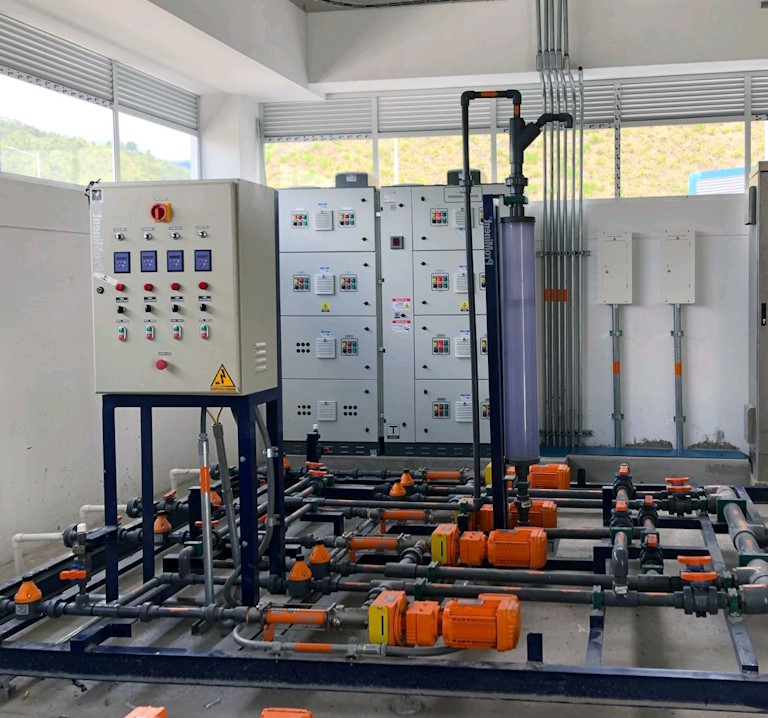
The importance of pressure control with a single pump
Unlike centrifugal pumps (whose flow rate decreases with increasing pressure), single-phase pumps are positive displacement pumps. These pumps are characterized by the following features:
- The output pressure depends on the system resistance.
- If the outlet is blocked, the pressure rises rapidly.
- The probability of mechanical damage to the water pumps and pipes is extremely high.
Excessive stress can lead to the following consequences:
- A crack or damage to an attached part.
- Damage to the shift mechanism and the gearbox.
- Pipe and fitting defects
- Fluid losses and risks to employee safety.
Therefore, in systems with only one pump, the use of a pressure relief valve is a technical requirement and a safety condition.
What is a safety valve?
A pressure relief valve is a mechanical safety device that limits system pressure. If the system pressure exceeds a preset value (setpoint), the valve opens automatically and diverts some of the fluid to a safer channel (e.g., a return line or a reservoir).
The main purpose of a safety valve is to prevent overpressure and thereby protect the system equipment.
Function of the pressure relief valve in a separate pump
In a single pump, the pressure relief valve is often the last line of defense against sudden pressure spikes. This component plays a crucial role in the following situations:
- Suddenly the water pipe was blocked.
- The valve in the drain line is not properly closed.
- Changes in fluid viscosity
- A subsequent device failure was detected.
In this case, the pressure relief valve opens automatically to relieve the excess pressure and prevent serious damage to the pump.
A type of pressure relief valve used in single-pump systems.
Safety valves are available in various designs depending on their construction and application. The most important of these are the following:
1. Spring-loaded safety valve
This type of pressure relief valve is most commonly found in single-pump systems. The valve’s opening pressure is regulated by a spring . Once the fluid pressure exceeds the spring force, the valve opens and releases the fluid.
Advantages:
- Simple structure
- Reasonable price
- Easy to modify
Shortage:
- Sensitivity to temperature changes
- Limitations under high-pressure conditions
2. Safety valve controlled by a pilot device.
In this type of valve, the opening and closing of the main valve is controlled by a smaller valve (the directional control valve). This design allows for more precise pressure regulation.
Advantages:
- High precision
- Suitable for high-pressure applications.
Shortage:
- Everything is much more complicated.
- Higher costs
3. Side pressure relief valve
Many single-pump systems use a side-mounted pressure relief valve. This allows excess fluid at the pump outlet to be returned to the inlet or reservoir.
Flux Mono Pump Product Catalog
Position of the pressure relief valve in a single pump system
The position of the pressure relief valve directly affects the performance and safety of the system. Under normal conditions:
- The safety valve should be installed as close as possible to the pump outlet.
- The drain line of the safety valve must be routed to a safe location (e.g. a storage tank or a return line).
- It is recommended to use suitable pipes to avoid pressure losses.
Incorrect installation of the pressure relief valve can lead to delayed operation and damage to the pump.
Adjusting the safety valve
One of the most important steps when installing a safety valve is setting the pressure. The set pressure should be as follows:
- Below the maximum permissible pressure of the pump
- Choose according to the workload of the system.
- The adjustments are made depending on the viscosity and temperature of the liquid.
Advantages of using pressure relief valves in single-phase pumps
Using a pressure relief valve offers many advantages, including the following:
- Improving system security
- Avoiding costly injuries
- Extension of the service life
- Reduction of unnecessary downtime in the production line.
- Improving system stability
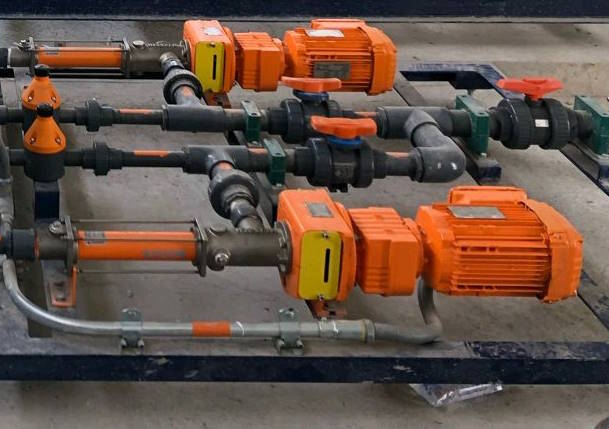
Maintenance and inspection of safety valves
Regular inspection and maintenance are essential for the proper functioning of the safety valve. Important measures include the following:
- Have your blood pressure checked regularly.
- Make sure there are no leaks.
- When using contaminated liquids, cleaning of the internal components is necessary.
- Replace springs or sealing rings if necessary.
Lack of maintenance can cause valves to fail in both the open and closed positions, which can be dangerous.
Common mistakes when using safety valves.
Common errors in single pump systems include:
- Completely without a safety valve.
- Choosing the wrong safety valve
- Incorrect print settings
- The flow direction of the liquid is incorrect.
Identifying and avoiding these errors is crucial for improving system security and efficiency.
In conclusion
In systems with separate pumps, the pressure relief valve is an essential component. Due to the high flow rate and constant flow of these pumps, pressure regulation is crucial. Proper selection, installation, adjustment, and regular maintenance of the pressure relief valve can prevent serious damage, production downtime, and safety hazards.
In summary, it is recommended that the use of safety valves in the design and operation of single pump systems be considered a technical and safety necessity and not an optional extra.