What is a drum pump?
A drum pump is a portable pump used to pump liquids from tanks, drums, canisters, bottles, and IBC containers. Many liquids used in manufacturing and processing plants are transported in 100- or 200-liter drums, which are often too heavy to pump directly
Why do we need a reservoir pump?
Drum pumps are designed for the easy and safe removal of virtually all chemicals from drums. We offer a wide range of models and hose lengths to meet the needs of all our customers.
First step:
Define project requirements:
Before selecting the appropriate pump series, piping design, motor type and accessories, it is important to determine the intended use of the pump
- Pressure and flow requirements : Most tank pumps are used for simple transfers, but some require higher flow rates (e.g., for emptying IBC containers or larger tanks) or higher pressures (e.g., for lifting liquids onto the top of equipment or into a second floor and for pumping more viscous liquids).
- Chemical name or type : This information is necessary to ensure the compatibility of the pump hoses with the fluid being pumped. It must also be determined whether the fluid is flammable or combustible.
- Temperature of the pumped liquid : The pipes in the pump tank have a maximum temperature limit. This maximum limit depends on the type, design, and length of the pipes.
- Density and viscosity : The performance of reservoir pumps varies when pumping liquids with a density above 1.0 or a viscosity above 1 centipoise . The performance depends on the pump design and the driving motor.
- Container size : The length of the pump hose depends on the container size. For example, a standard 200-liter (45-gallon) container requires a 100-centimeter pump hose. Longer pump hoses may be necessary for IBCs (Intermediate Bulk Containers) and tanks. 15- and 30-gallon (approximately 57 and 114-liter) containers use shorter pump hoses.
- Motor selection : Determine the installation site requirements for the selected motor type, e.g., electric, explosion-proof, or pneumatic. For electric motors, check the required voltage.
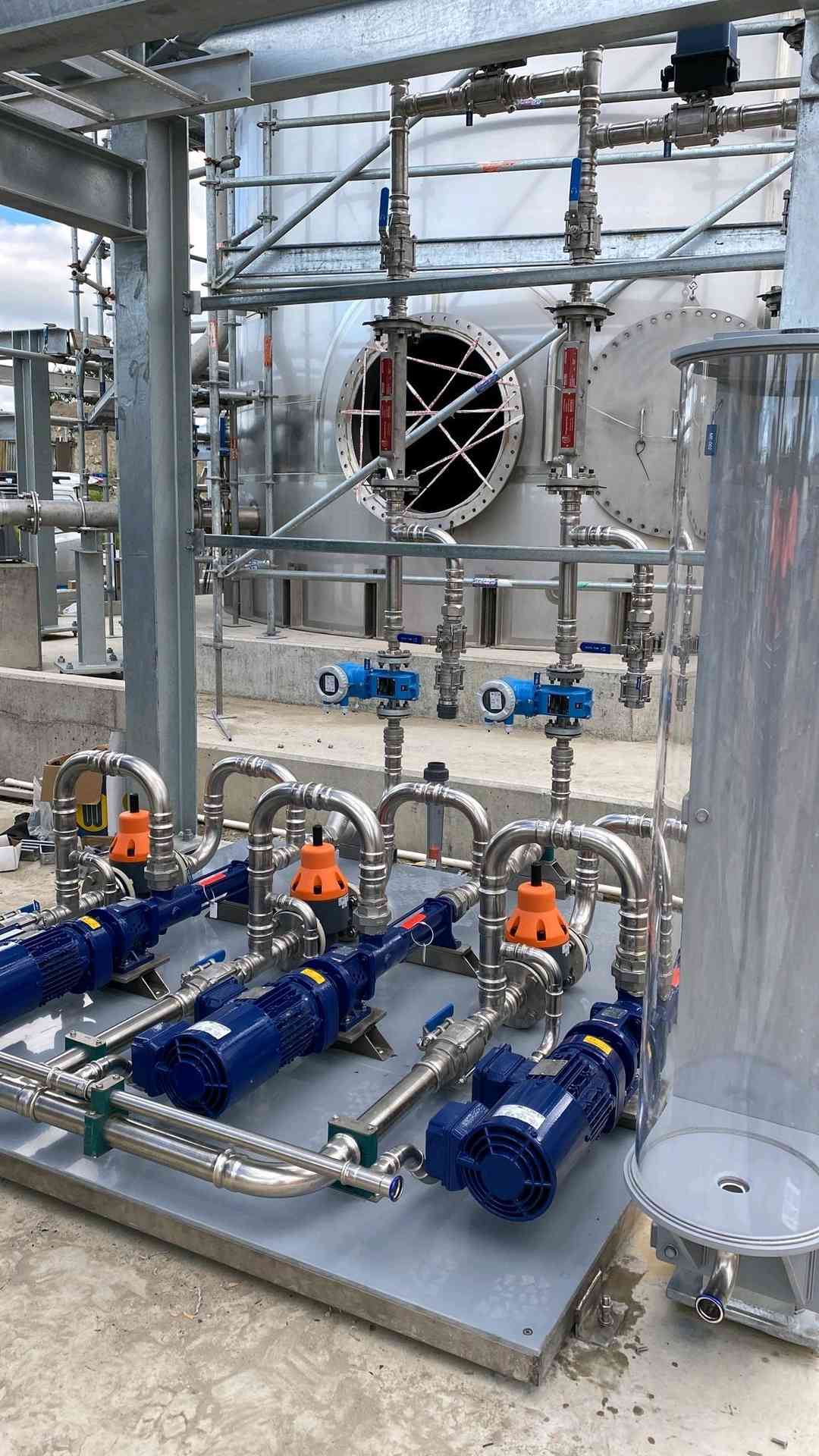
Step two:
Select the appropriate FTI pump series and suitable piping materials.
Once the application requirements have been defined, the appropriate FTI water pump can be selected for the specific task.
- Selecting the correct pump hose material : Start by selecting the outer hose material. Available outer hose materials include polypropylene, 316 stainless steel, PVDF, CPVC, and pure polypropylene/PVDF composites.
- Use the Chemical Resistance Guide to select an outer pipe material that can withstand the substance being transported. You can find the Chemical Resistance Guide on the Practical Information page.
- Note: In addition to the material of the outer pump tube, each pump tube also contains other materials that come into contact with the fluid being pumped.
- Information on the building materials can be found in the Freddy series technical manual. For compatibility questions, please contact our sales team on 0800 316 7891.
- Choose the optimal pump model for your tank: Consult the technical manuals of the respective series to determine the most suitable model .
- The last section provides a brief overview of the pump series.
- If the viscosity of the customer’s fluid is, for example, 25,000 g/min, an HVDP series pump is the optimal choice. Ensure that the selected pump series and piping materials are suitable for the fluid . To do this, compare the fluid’s temperature, density, and viscosity with the specifications in the technical manual.
- Choose the appropriate hose length depending on the capacity.
Step 3:
Select the correct FTI engine.
- Selecting the correct engine: Using the engine selection information in the technical manual, select the most suitable engine. Not all engines are compatible with all pump types. Ensure you select the correct engine for your specific pump type (this information can be found in the technical catalog and price list).
- Information on quick engine testing methods can be found in the section at the end of this document.
- If the product being conveyed is flammable or combustible (or is located in a potentially explosive atmosphere), ensure that stainless steel pipes use explosion-proof motors or pneumatic actuators and are equipped with our ESD protection kit.
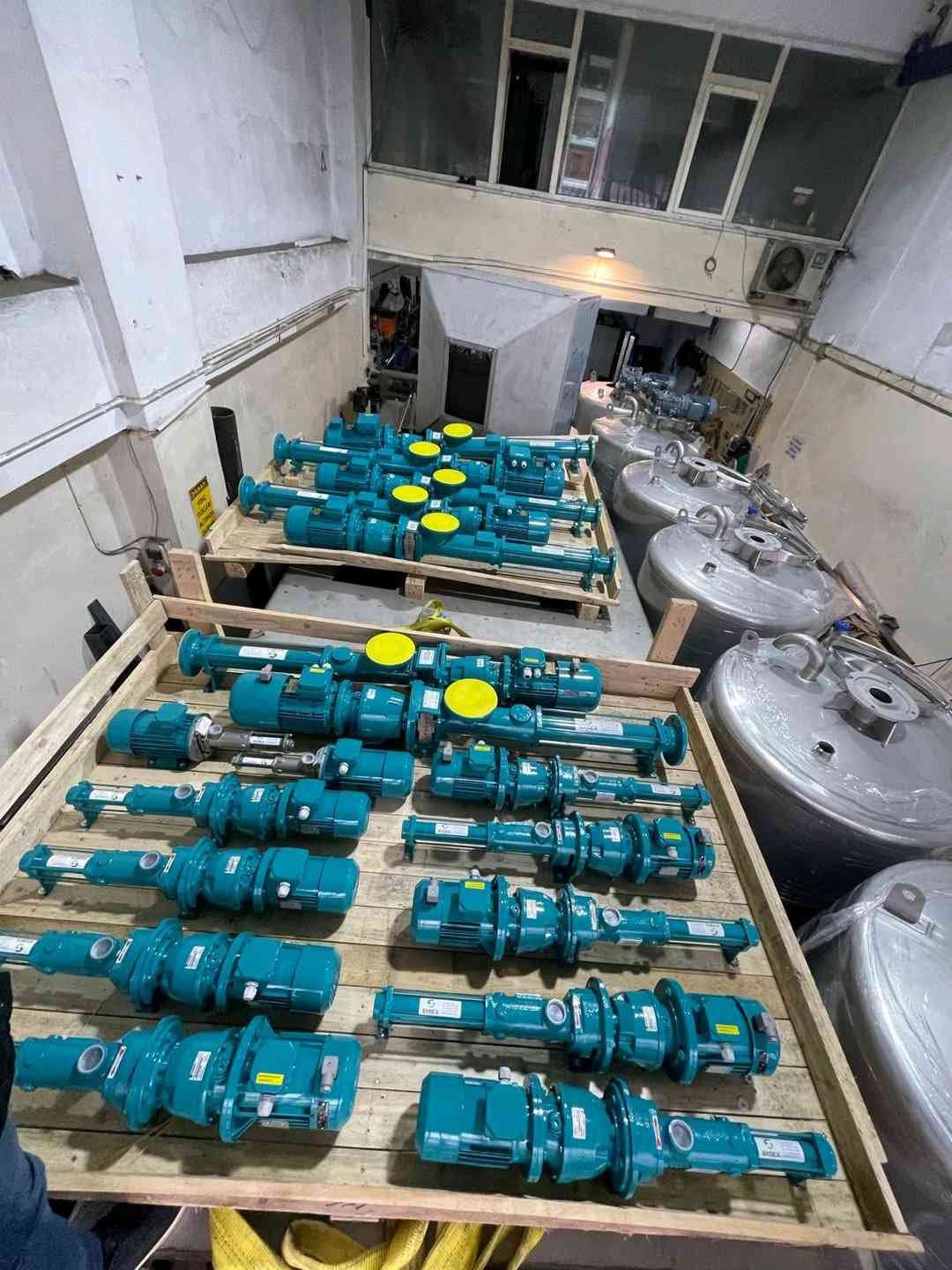
Step four:
Select any accessory.
We offer a complete range of accessories for drum pumps
- Flexible PVC hose
- Antistatic set : When used with stainless steel tube pumps and explosion-proof or airtight motors, it ensures the safe pumping of flammable or combustible liquids.
- Cylindrical adapter: Ensures a perfect fit between pipe and cylindrical body; various construction materials are available.
- Flow meter : Precisely measures the flow rate of the pumped liquid.
- Filter/ oiler assembly : Supplies the air motor with dry air and lubrication .
- Nozzle : used to regulate the flow of liquid.
- Filter : Protects water pumps from damage caused by foreign objects.
Overview of Water Pump Series
Below you will find a brief description of the individual pump series. More detailed information can be found in the technical manual
- PF Series : The PF series pumps are our best-selling and most versatile reservoir pumps. They feature a leak-proof design, superior performance, and a variety of configurations. Outer hoses are available in polypropylene, 316 stainless steel, or PVDF. Hose lengths range from 15 to 72 inches. Please contact us for more information.
- EF Series : The EF series pumps are a cost-effective alternative to hand pumps. They are lightweight, ergonomic, and designed for intermittent use (15-minute cycles). They feature a polypropylene outer tube and an inner shaft made of stainless steel or 625 alloy. Learn more.
- TT Series : The TT series comprises encapsulated pumps made of 316 stainless steel, CPVC, or hygienically graded 316 stainless steel. Equipped with a screw compressor, the TT series pumps are ideal for pumping liquids containing fine particles. The TTS series models are particularly suitable for flammable or combustible liquids. Learn more.
- The TBP series pumps are high-speed, encapsulated pumps made from pure materials, ideal for pumping aggressive chemicals. The outer casing is constructed from a composite of pure polypropylene and pure PVDF. This design makes them perfectly suited for pumping bleach (sodium hypochlorite). Learn more…
- HVDP Series : The HVDP series pumps are positive displacement screw pumps capable of handling highly viscous fluids with viscosities up to 100,000 cPW. The cam mechanism allows for quick cleaning. Thanks to the gear design, more compact and lighter motors can be used. Learn more.
- The TM-TMS series drum mixers are made of 316 stainless steel . Their bubble-free circulation system is ideal for mixing materials with settled solids (such as paints and inks). Learn more…
Engine Test
Below is a brief description of the different engine types. For more detailed information , please refer to the technical manual
- Splash-proof: These high-speed motors prevent water from splashing in all directions and are drip-proof. They are available in single-phase versions with 115 V and 230 V, 50/60 Hz.
- Enclosed motors: These include high-speed brushless motors and low-speed asynchronous motors. They are characterized by a completely enclosed, air-cooled design, are protected against dust and corrosive gases, and are resistant to splashing water from all directions. Enclosed motors are suitable for use in environments with gaseous chemicals such as bleach (sodium hypochlorite).
- Explosion-proof design: These motors include high- and low-speed asynchronous motors . They are suitable for use in potentially explosive atmospheres and feature a sealed design that prevents the ingress of dust and corrosive vapors and provides protection against splashing water from all directions.
- Variable-speed motors: These high-speed motors are fully enclosed, air-cooled, dustproof, corrosion-resistant, and splashproof from all sides. They are suitable for indoor and outdoor use. These are Finish Thompson’s most powerful motors of this type. They feature a speed controller for precise control of the water flow.
- Pneumatic motors are lightweight, offer variable speed, and require no electricity, thus reducing the risk of ignition from flammable gases (making them generally suitable for use in potentially explosive atmospheres). To extend the motor’s service life, the installation of a lubrication system with a filter is recommended.