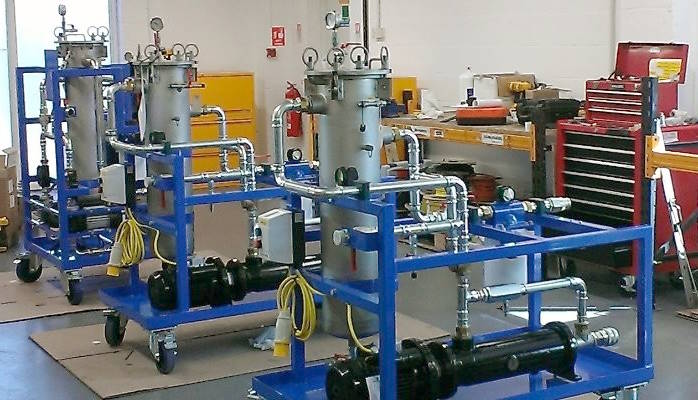
The oil and gas industry, one of the world’s most important sectors, requires advanced equipment and technologies for the extraction, transportation, processing, and refining of oil and gas. One of the most important pumps in this industry is the progressive cavity pump, which is widely used due to its high efficiency and ability to pump highly viscous fluids containing suspended solids. In this article, we will examine the applications, performance, and advantages of progressive cavity pumps in the oil and gas industry.
What is a monkey bomb?
Definition and function
An eccentric screw pump, also called a single-volume pump, is a positive displacement pump consisting of a screw rotor and a stator. It pumps liquids continuously and uniformly through the rotation of the rotor within the stator. The spiral arrangement of the rotor and stator creates cavities that convey the liquid to the pump outlet.
Main ingredients
- Rotor : A spiral-shaped component that rotates inside the stator and moves the fluid.
- Stator : The cylindrical part in which the rotor rotates and which forms cavities for the movement of fluids.
- Motor : The component that provides the power needed to rotate the rotor.
Single pump application in the oil and gas industry
Transport of crude oil
One of the most important applications of single-stage pumps in the oil and gas industry is the transport of crude oil from production sites to refineries. These pumps are ideally suited for pumping various types of crude oil, as they can also handle viscous liquids containing suspended solids without difficulty. Furthermore, they ensure a consistent flow of oil without damaging the equipment.
Transport of petroleum products
Single-stage pumps are used to transfer refined petroleum products such as diesel fuel, gasoline, kerosene, and others. Thanks to their high precision and ability to handle viscous liquids, these pumps increase throughput and reduce operating costs.
Chemical injection
In oil and gas refining and production, the addition of various chemicals plays a crucial role in improving product quality and efficiency. Single-stage pumps are used for adding chemicals such as corrosion inhibitors, deposit inhibitors, and additives to petroleum products due to their high precision and consistency.
Transport of oil sludge
Single-stage pumps are also used for transporting oil sludge and contaminated materials. Their ability to pump liquids containing solid particles and viscous fluids makes these pumps ideal for transporting oil sludge from production plants to processing and disposal facilities.
Drilling and production processes
Single-stage pumps are used to convey drilling mud and other fluids in oil and gas production. They improve drilling efficiency and reduce operating costs because they can also handle viscous fluids containing suspended particles.
Natural gas processing
Single-stage pumps are also used in natural gas processing. They serve to transport chemicals and solutions required for natural gas purification and treatment. Single-stage pumps contribute to improving the efficiency and quality of gas processing.
Injection of water and chemical granules
In some cases, water pellets and chemicals are injected into oil and gas wells to increase productivity and production capacity. Single-stage pumps are ideally suited for this purpose due to their high precision and ability to inject materials uniformly.
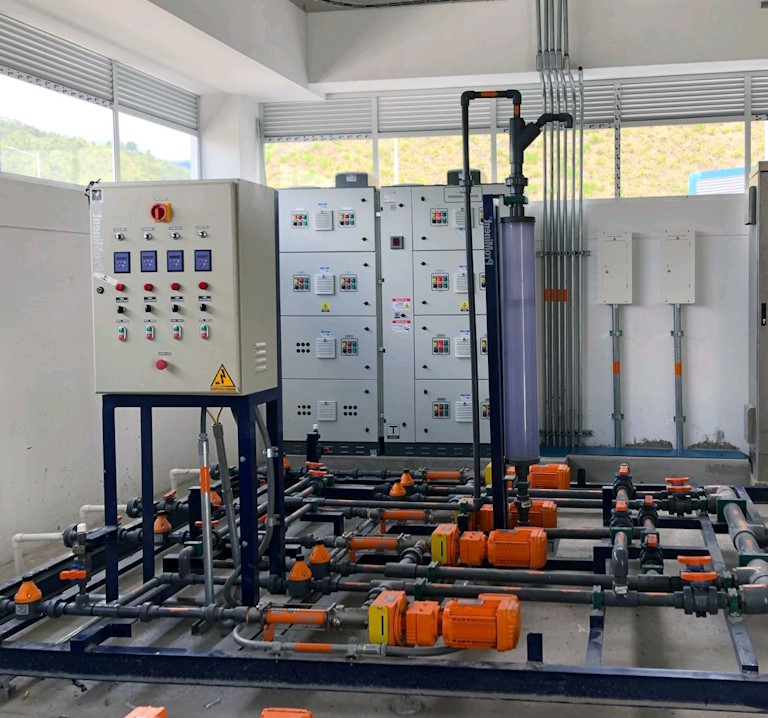
Advantages of using single-stage pumps in the oil and gas industry
Ability to process viscous liquids.
Thanks to their special design, single-stage pumps are suitable for pumping highly viscous liquids. This makes them ideal for use in the oil and gas industry for transporting viscous and heavy materials.
Possibility of working with suspended particles.
Monopumps are characterized by their ability to pump liquids containing suspended particles and solid fibers without any loss of performance. This characteristic enables their use in various sectors of the oil and gas industry.
steady flow
Single-stage pumps ensure a continuous, even flow of liquid , improve process quality and reduce pressure and flow fluctuations.
high resistance
Thanks to the use of corrosion- and wear-resistant materials, Mono pumps ensure a long service life and high efficiency even under demanding operating conditions. This reduces maintenance and repair costs.
Easy to maintain and repair.
Single-stage pumps are easy to maintain and repair due to their simple design and small number of moving parts, which helps to reduce operating costs and improve efficiency.
Increased productivity
The use of single-stage pumps contributes to the efficiency of oil and gas production. They increase productivity , reduce operating costs, and prevent problems associated with inadequate transport.
Maintenance and repair of single-stage pumps in the oil and gas industry
Regular inspections
Regular inspections of single-stage pumps help to identify potential problems and defects. This includes checking the physical condition of the components, the rotor and stator performance, and the injection accuracy.
Parts replacement
In the event of a malfunction or failure of a single-stage pump, replacing its components helps maintain its performance and efficiency. These components include the rotor, stator, and components of the control system.
cleaning
Regular cleaning of a single-stage pump improves its performance and lifespan. This process removes deposits and dirt from the components.
calibration
Regular calibration of a single-acting pump helps maintain injection accuracy. This process involves recalibrating the pump components and the control system to ensure precise injection and accurate material transport.

Diploma
Monoblock pumps are widely used in the oil and gas industry due to their unique design and high efficiency. Their ability to pump viscous fluids containing suspended solids, their stable flow rate, their long service life, and their ease of maintenance and repair improve the quality and efficiency of oil and gas production facilities and oil refineries . Regular maintenance and repair of monoblock pumps in the oil and gas industry extend their service life, improve performance, and prevent problems caused by gearbox failures. The correct selection and proper use of a monoblock pump improve the quality and safety of oil and gas production facilities and oil refineries, preventing accidents and problems resulting from gearbox failures.