Technical properties of drilling fluids
Viscosity: 100 centipoise
; Specific gravity: 1.7–2.3
When drilling for oil and gas wells, pumping in drilling mud or bentonite is crucial for several reasons. The drilling mud cools the drill bit and carries the drill cuttings to the surface, creating a closed system. It also generates hydrostatic pressure, which prevents fluids like oil and gas from rising to the surface. Because drilling mud is a thickening agent, it solidifies without movement, forming an effective barrier between the liquid and the gas. 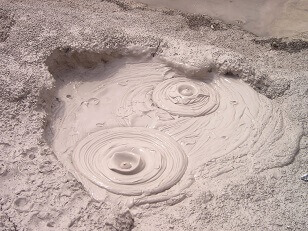
The consistency of the drilling fluid and its application method influence the performance of the drilling pump. Centrifugal pumps can be used , but progressive cavity pumps are preferable for highly viscous drilling fluids. Wear also plays an important role: positive displacement pumps operate at lower speeds and exhibit less wear, but also have lower productivity.
Drilling fluids can be water-based, oil-based, or synthetic. Water-based drilling fluids are environmentally friendly and, due to their proximity to the surface, are typically used in shallow boreholes. Oil-based drilling fluids are used in hard rock formations and contain low levels of toxic oils, while synthetic drilling fluids are not petroleum-based and have plastic-like properties.
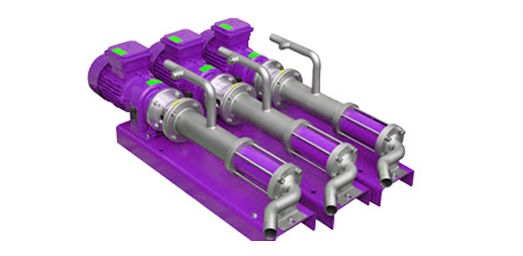
In the drilling industry, whether in deep-sea oil and gas exploration, geotechnical engineering, or hydraulic engineering, the monitoring and management of drilling fluids (drilling mud) is crucial. Drilling fluid is a complex mixture of water, clay, chemicals, and additives, and therefore requires pumps that can withstand high viscosity, abrasive particles, and harsh operating conditions. Progressive cavity pumps (PCPs) are among the most reliable and efficient pumps of this type.
The article provides a detailed analysis of the functions, design, benefits and maintenance of individual pumps in drilling fluid circulation systems .
Table of Contents
-
Introduction: Why are drilling fluids and their transport so important?
-
What is a simple pump? A brief description of its unique mechanism.
-
Why is a single pump the ideal choice for drilling fluids? (Key advantages)
-
The main components of a pump
-
Application of single pumps in the drilling industry
-
How to select the right single pump for your drilling project
-
Installation, operating and maintenance instructions
-
Troubleshooting and solving common problems
-
The result: Smart decisions lead to higher productivity.
ML chamber pumps from Mono-pumps.com
1. Introduction: Why are drilling fluids and their transport so important?
Drilling fluid is more than just a liquid; it is the lifeblood of the drilling system. Its main functions include:
-
Cooling and lubrication of the drill bit: Prevents overheating and corrosion of the drill bit.
-
Drilling material transport: the transport of rock and soil particles from the bottom of the borehole to the surface.
-
Well pressure regulation: Creating a constant water column to prevent groundwater leaks.
-
Well stabilization: Prevention of well collapse.
To fulfill these tasks, the drilling fluid must circulate continuously through the system at a constant flow rate and pressure . This is where mud pumps come into play. Among the various pump types, disposable pumps occupy a special position due to their unique characteristics.
2. What is a simple pump? A brief description of its unique mechanism.
A single-chamber pump, also called a screw pump , progressive cavity pump (PC pump) , or simply screw pump , is a positive displacement pump. Unlike centrifugal pumps, its operating principle is very simple, yet innovative.
The pump consists of two main components:
-
Rotor: a metal cylinder with a circular cross-section and spiral shape (similar to a large nail).
-
Fixed part: a rubber element (elastomer) arranged in a metal housing, in the inner surface of which a screw recess is provided at a specific angle.
The operating principle is as follows: The rotor is located inside the stator. Due to the different eccentricities of the rotor and stator axes, the rotation of the rotor creates closed, independent cavities. These cavities move continuously from the suction to the pressure side during rotor rotation, displacing the fluid. This mechanism generates a uniform, constant, and pulsating flow.

3. Why is a single pump the ideal choice for drilling fluids? (Main advantages)
Due to its unique design, the pump is ideally suited for pumping drilling fluid.
-
This single-chamber pump is suitable for pumping highly viscous liquids containing abrasive particles: drilling mud is typically viscous and contains large quantities of solids and abrasive particles. The pump’s eccentric chamber mechanism allows for the easy pumping of such liquids without significant damage to the system. The stator rubber also ensures high wear resistance.
-
Smooth, pulsating flow: Unlike piston pumps, which produce a pulsating flow, a single pump can deliver a smooth, constant flow. This is crucial for sensitive applications, such as the precise dosing of drilling fluid additives.
-
Excellent self-priming capability: A single pump can generate a high initial vacuum by filling the suction pipe with liquid and pumping it from a relatively great depth. This feature is particularly advantageous when the sludge container is located at a shallow height.
-
High efficiency at low flow and high pressure: Centrifugal pumps are typically inefficient at low flow rates, but a single pump can generate a high working pressure while maintaining efficiency even at very low flow rates.
-
Simple design and maintenance: Thanks to fewer moving parts and a simple construction , these pumps are easier to maintain than other positive displacement pumps. Replacing the stator and rotor is also quick and relatively inexpensive.
-
Bidirectional function: Changing the rotor’s direction of rotation also reverses the fluid flow direction. This function allows for flushing or emptying the pipeline in reverse.
4. The main components of a pump
To better understand maintenance and troubleshooting, it is important to know the main components:
-
Rotor: This is the central moving component of the pump, typically made of carbon steel or stainless steel and coated with a hard layer such as chromium to improve resistance to corrosion and wear.
-
Stationary part: This is the central, stationary component of the pump and consists of a metal housing and an elastomer layer. The choice of elastomer material (e.g., nitrile rubber, NBR, or high-strength elastomer) depends on the type of medium to be pumped (drilling mud, acids, or chemicals).
-
Casing: The body that contains the solid part.
-
Gear shaft: transmits the power from the motor to the rotor.
-
Universal joint: This component enables power transmission when the rotor is not rotating in a centered position.
-
Mechanical seals or stuffing boxes: Prevent fluid from leaking out at the point where the universal joint enters the housing.
5. Application of single pumps in the drilling industry
Individual pumps are frequently used in various units of drilling rigs or equipment:
-
Pumping the drilling fluid from the storage tank into the system: Pumping the drilling fluid from the drilling fluid storage tank to the main high-pressure pump (mud pump).
-
Precise injection of chemicals and additives: Thanks to the constant and controlled flow rate, it is ideally suited for the precise addition of materials such as polymers, thickeners (barytes) and water-reducing additives to the suspension.
-
Pumping of liquids containing drill cuttings: Removal of coarse drill cuttings from separation devices (vibrating screens and centrifuges).
-
Waste transport and disposal system: Transfers the remaining sludge to suitable storage tanks.
6. How to select the right single pump for drilling projects
Choosing the right water pump is crucial for its longevity and optimal performance. Important selection criteria:
-
Flow rate: in gallons per minute (GPM) or cubic meters per hour (m³/h).
-
Pressure: The unit of measurement is bar or pounds per square inch (PSI). This is the pressure required to overcome friction in the pipeline and differences in elevation.
-
Viscosity of the fluid: Drilling fluid is typically a non-Newtonian fluid with high viscosity.
-
Erosion: The size, concentration, and hardness of the solid particles in the clay.
-
Chemical properties of the liquid: The pH value and the presence of certain chemicals directly influence the selection of elastomer materials for the stationary part.
-
Operating temperature: The fluid temperature affects the properties and viscosity of elastomers.
7. Installation, debugging and maintenance instructions
Adhering to proper maintenance guidelines will significantly extend the lifespan of your water pumps.
Fixed:
-
The water pump must be mounted on a stable and level surface
-
Make sure that the pump and drive motor (electric motor or diesel engine) are properly aligned.
-
Ensure that the inlet and outlet pipes are correctly connected and have the correct diameter. The inlet pipe should be as short and straight as possible.
Settings:
-
The pump must never run dry. Ensure that the pump and suction hose are filled with liquid before switching it on
-
Turn the water pump in the correct direction.
-
Charge the pump slowly and gradually .
Preventive maintenance:
-
Lubrication: Lubricate bearings and drive shafts according to the manufacturer’s instructions
-
Check the mechanical seal: Make sure there are no unusual leaks.
-
Check the direction of rotation of the stator and rotor: The stator should remain flexible and show no cracks or stretching. The rotor should also be free of scratches and signs of excessive wear.
-
Rinse the pump after use: After completing the work, thoroughly rinse the pump with a suitable liquid (e.g. water) to prevent the drilling fluid from hardening inside the pump.
8. Solve common problems
-
Reduction of flow rate or pressure:
-
Cause: Corrosion on the stator or rotor, leading to a reduction in the stator diameter and fluid overflow.
-
Solution: Replace the stator/rotor.
-
-
The water pump cannot pump any liquid (loss of suction):
-
Causes: Leaks in the suction pipe, pump running dry, excessive suction lift.
-
Solution: Check the connection of the oil suction pipe and refill the pump with fluid.
-
-
The water pump will get very hot:
-
Reasons: The operating pressure exceeds the permissible limits, the pump runs dry, the viscosity of the fluid is too high, or the lubrication is insufficient.
-
Solution: Check operating pressure, ensure the presence of fluids , check viscosity and lubrication.
-
-
Unusual noises:
-
Reasons: Wear of parts, bearing wear, pump operation in cavitation mode (insufficient fluid supply to the suction pipe).
-
Solution: Check wear parts and replace them if necessary to ensure proper suction performance.
-
9. Conclusion: Smart decisions lead to higher productivity.
Thanks to their unique combination of simplicity, high efficiency, and durability, single-stage mud pumps have become indispensable in the drilling industry. They can handle even difficult-to-handle fluids such as drilling mud, ensure a stable flow rate, and require relatively little maintenance, making them an economical and reliable choice.
Investing in a high-quality injection system and carefully planning its installation, operation, and preventive maintenance not only avoids costly drilling work but also improves the productivity, safety, and lifespan of the entire drilling fluid circulation system. Under demanding and hazardous drilling conditions, an injection system is a reliable tool for engineers and operators.