Single-phase pumps are among the most widely used positive displacement pumps in various industries and are employed for pumping viscous media, liquids containing solids, and shear-sensitive substances. Despite their long service life and specialized design, single-phase pumps, like other industrial equipment, are susceptible to corrosion, leaks, performance loss, and the failure of internal components. Therefore,regular and professional maintenance of single-phase pumps is essential.
This article provides a complete overview of pump components, signs of failure, troubleshooting steps, repair methods, and maintenance tips to help you save time and repair costs.
What is a simple pump? How does it work?
A single-chamber or screw pump is a positive displacement pump consisting of two main parts: a stator and a rotor . The rotor is made of hardened or stainless steel and rotates inside the stator, which is made of robust rubber .
The rotating rotor in the stator creates a series of sealed chambers that guide the fluid from the pump inlet to the outlet. This allows a single pump to handle highly viscous liquids (such as organic substances, honey, pastes, suspensions, etc.) without decomposition or foaming.
Application of individual pumps in various industries
Single-head pumps are widely used in a variety of industries, including:
-
Food industry (transport of honey, sauces, yogurt, broths and dough)
-
Transport of crude oil, drilling mud and polymers in the oil, gas and petrochemical industries.
-
Water treatment plants and sewage treatment plants (sludge and wastewater pumps)
-
Pharmaceutical and medical industry
-
Mining and cement industry
Therefore, each industry has different maintenance requirements for individual pumps , which require different operating conditions and materials.
Signs of pump failure and the need for repair
Before a water pump fails completely, certain signs of a defect usually appear . Recognizing these signs can prevent serious damage.
The main symptoms of a pump failure:
-
A drop in pump outlet pressure.
A reduction in flow rate and pressure usually indicates wear on the stator or rotor. -
A fluid leak has occurred at the oil seal or shaft seal.
A defective mechanical seal or a faulty rubber O-ring can also cause leaks. -
Unusual noises and excessive vibrations can be caused by shaft misalignment, trapped solids, or worn bearings.
-
The temperature of the water pump or the engine housing increases.
-
Difficulties starting or the column locking up
-
Contamination from fluid leaks or excessive corrosion
If any of these symptoms are detected, the affected pump should be diagnosed and repaired as soon as possible.
Maintenance steps for a pump
Each pump must be serviced according to the manufacturer’s instructions and by a qualified technician. The general maintenance procedures are as follows:
1. Disassembly
First, disconnect the water pump from the water supply and drainage system. Then, switch on the following components in the order shown:
-
engine or transmission
-
Connections and columns
-
pin or socket
-
Rotating and stationary
-
Housings, seals and O-rings
During this phase, it is necessary to carefully inspect all components and document any damage.
2. Inspection of the parts
In this section, experts will examine the most important components for detecting corrosion, wear, deformation, or cracks:
-
Rotational inspection: Check the surface for brightness and uniformity, as well as for rust or corrosion.
-
Stationary part: Check for cracks, stretching, rubber tears or changes in the inner diameter.
-
Bearings and rolling bearings: testing for noise and axial play
-
Mechanical seal: Check sealing surface and spring.
If a defect is detected, the part must be replaced or repaired.
3. Repair or replacement of parts
Depending on the type of malfunction, the following steps must be taken:
-
The rotor is ground and polished to restore tolerances.
-
Replacement of the stator housing or replacement of the entire stator
-
Replacement of bearings, seals, bolts, mechanical seals and bushings.
-
Align the column and joint to ensure correct alignment.
If original materials are not available, custom-made products or corrosion protection coatings can be used.
4. Reassembly
After maintenance, all components must be reassembled and thoroughly lubricated (with grease or special oil).
The manufacturer’s instructions must be strictly followed to ensure that shaft alignment, screw tightening torque, and rotor-stator clearance meet specifications.
5. Performance testing and delivery
Finally, a separate pump was installed on the test platform. The tests included:
-
Flow pressure and export
-
No leaks
-
Sound effects for the performance
-
Check and record the motor’s power consumption
to ensure proper maintenance.
Key points for the maintenance of a single pump
-
Use a lubricant that is approved and compatible with the fluid being pumped.
-
The water pump should never be run while it is still dry (otherwise the stator will burn out).
-
Use soft tools when assembling the rotor to avoid damaging its surface.
-
Check the direction of rotation of the motor before final connection.
-
Use an air intake filter to prevent large particles from entering.
Preventive maintenance (PM) of a pump
Instead of only taking action when equipment fails, you can significantly reduce costs by implementing a regular preventive maintenance program.
Recommended maintenance schedule:
| Time period | activity |
|---|---|
| daily | Check for leaks, unusual noises, and the engine temperature. |
| weekly | Monitoring of pressure, flow rate and cleaning in the area of the pump |
| monthly | Check the lubricant level, vibrations, and bearing temperature. |
| six months | Check the connection and replace the seals or O-rings. |
| yearly | Completely disassemble the pump and check the stator and rotor. |
How much does it cost to repair a pump?
The cost of maintaining a pump depends on various factors, including:
-
Brands and models of pumps (SEEPEX, Netzsch, PCM, Roto, Mohno, etc.)
-
Extent of damage and spare parts requirements
-
Prices for imported components
-
Wages of workshops or skilled workers
-
Location and access requirements of the facility
If the stator and rotor are in good condition, repair costs typically range between 10% and 30% of the new price . However, if both components need to be replaced, repair costs can reach up to 70% of the new price.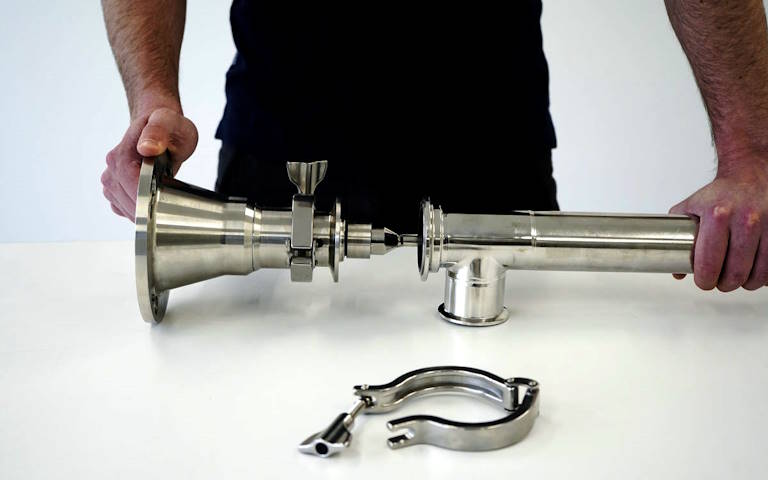
Choose a professional technician to repair your individual pump.
Repairing a single pump requires specialized technical knowledge and precision tools . When selecting a repair shop, you should consider the following:
-
Experience in repairing individual pumps of various brands
-
Use of a precise spirit level and measuring instruments
-
Functional tests and a written guarantee are offered.
-
Get original parts.
If the repairs are carried out on site, be sure to ask the repair workers to perform a functional test in your presence.
The difference between repairing an industrial pump and a household pump
Large, powerful single-stage industrial pumps are typically used in production lines, refineries, and wastewater treatment plants.
In contrast, more compact single-stage pumps are designed for agricultural applications or the transport of lighter materials.
For this reason:
-
Certain industrial pumps require more sophisticated tools and in-depth technical knowledge.
-
Although maintenance costs are higher, the lifespan is longer.
-
For small individual pumps, replacing the entire pump is usually cheaper than repairing it.
Common problems with individual pumps and their solutions
| Error type | Possible reasons | Solution |
|---|---|---|
| Decline in export volume | Wear of rotor and stator | Replacement or extension |
| Leakage at the axle | Mechanical failure due to flooding | Flood replacement |
| excessive trembling | Bearing misalignment or failure | Recalibration and replacement of the bearings |
| unusual noise | There is air or a blockage in the system. | Ventilation and cleaning |
| Engine overheating | Excessive pressure or wave fixation | Checking the pressure and lubrication of the system. |
Safety instructions for repairing a single pump
-
Before any repair work begins, it is essential to completely switch off the power supply and the pressure in the system.
-
Wear oil-resistant gloves and safety goggles.
-
If the dangerous liquid comes into contact with the skin, wash the affected area immediately.
-
Use standard tools and avoid direct impacts on the components.
In conclusion
Maintaining a single pump is a complex task requiring technical knowledge, precision tools, and extensive experience. Simple repairs and regular maintenance can extend the pump’s lifespan by many years and prevent costly downtime and leaks.
If your water pump is experiencing problems such as low pressure, leaks, vibrations, or unusual noises, it is best to contact a professional pump repair center for a full inspection and repair.